
Lake Powell boat rentals: how to pick, book, and budget
A first-timer’s guide to Lake Powell boat rentals — houseboat vs. day boat, real budget math, when to book, and the fine print that trips people up.
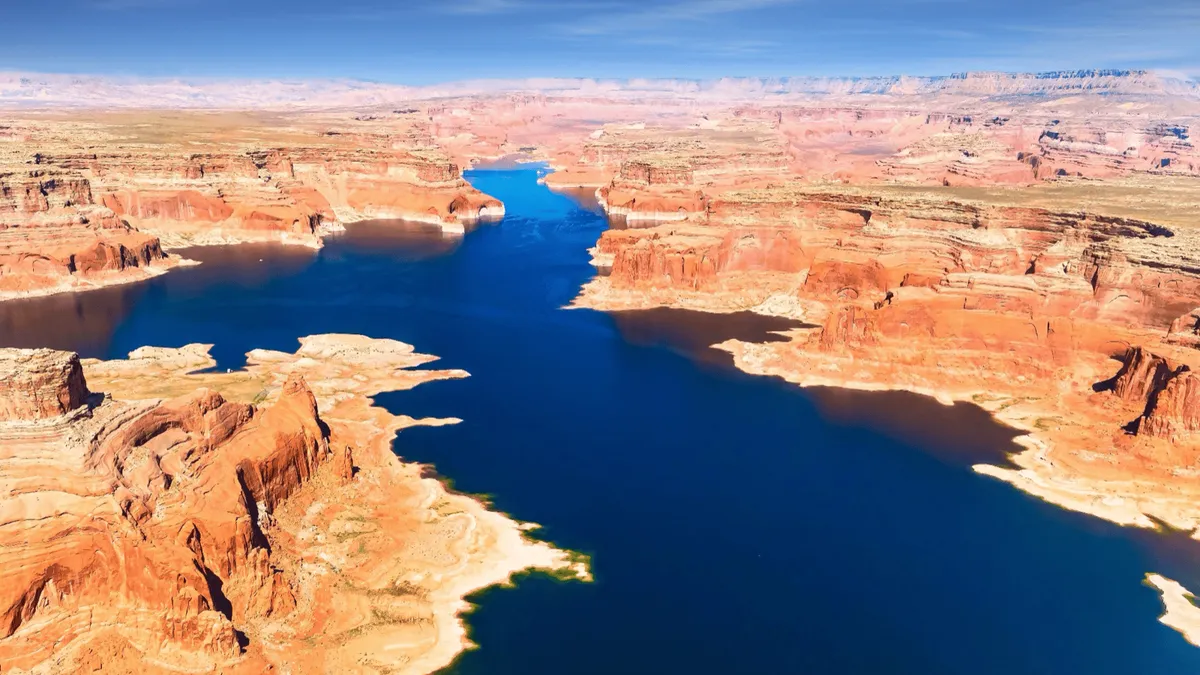
Quick answer
Pick the boat around your crew and trip length — a houseboat for multi-day living aboard, a pontoon or ski boat for day trips. Book 9–12 months ahead for peak summer, 4–6 for the shoulder seasons. Budget the full trip — fuel, the waiver, groceries and the park fee push a mid-range houseboat week into the thousands. No special license needed — just a driver’s license and the marina orientation.
Renting a boat on Lake Powell sounds simple until the details pile up — boat types, fuel math, cancellation windows, a booking calendar that starts a year out. None of it is hard once it’s laid out in order. Here’s the whole thing, start to launch.
| Boat type | Best for | Trip length | Rough cost tier |
|---|---|---|---|
| Houseboat | Living aboard, big groups | 3–7 days | Highest — thousands |
| Pontoon / deck boat | Family day trips, swimming | Day rental | Moderate |
| Ski / speedboat | Watersports, covering miles | Day rental | Moderate–high |
| Captain hire (add-on) | Nervous first-timers | Per day | On top of rental |
Which boat should you rent?
Match the boat to your crew and what you actually want to do — that one call shapes the whole trip. A family that wants to swim and picnic near a marina needs a completely different boat than eight friends planning a week up-lake. Three categories cover nearly everyone, plus the option to bring a captain along.
Houseboats: a floating home for multi-day trips
A houseboat is the classic Lake Powell rental — a home that drifts with you into tucked-away canyons and wakes you to a new view each morning. Sizes fit crews from 6 up to 12 or more, with separate sleeping areas, a working kitchen, showers, a lounge, and usually an upper deck with a grill and a slide.
Driving something that big feels daunting for about ten minutes. The marina orientation walks you through steering, anchoring for the night, and running the onboard systems. The usual play: beach the houseboat at a quiet sandy cove as your base, then use a smaller tender boat for side-canyon runs. Book 3, 5, or 7 days and you’ve got room to actually settle into lake life instead of rushing it.
Pontoon and deck boats: the day-trip family platform
Staying at a lodge or planning shorter outings? A pontoon boat keeps it simple — roomy, stable, cushioned seats, a bimini top for shade, and plenty of deck to spread out. It’s the family favorite for a reason.
They’re also nimble. Smaller than a houseboat, a pontoon slips into the twisty, narrow canyons the big boats can’t enter, and pulls right up to a private beach for the afternoon. For a smaller group or a family testing the water before committing to a bigger trip, it’s the easy entry point.
Speedboats and ski boats: watersports and covering ground
Got a crew that’s all about the action? Speedboats and ski boats bring the muscle for towing — water skiing, wakeboarding, tubing — and throw the wake shape to do it well.
Speed also buys range. Lake Powell has nearly 2,000 miles of shoreline, and a fast boat lets you take in a real chunk of it in a day — darting from Wahweap Bay toward Rainbow Bridge and poking into the arms along the way. If you want more sights with a jolt of adrenaline, this is the boat.
Nervous first-timer? Hire a captain
You can hand off the wheel entirely. Hiring a certified captain frees you from piloting, charting the route, and dropping anchor so you can focus on the trip. A local captain also knows the hidden corners — quiet beaches, the good photo spots — that you’d likely skip on your own. Many people book a captain for just the first day, learn the boat, then take over with confidence.
What does a Lake Powell boat rental actually cost?
The base rental is the start, not the total — fuel, the mandatory waiver, groceries and park fees all stack on top. As of mid-2026, a rough example for a 5-day mid-tier houseboat with 8 people in the off-peak season looked like this. Treat it as a shape, not a quote; real numbers move with boat size, season and how far you run.
| Line item | Rough amount | Notes |
|---|---|---|
| Houseboat rental fee | ~$4,500 | Varies widely by size and season |
| Estimated fuel | ~$1,200 | Depends on distance and generator use |
| Mandatory insurance / waiver | ~$250 | Usually non-optional |
| Groceries & provisions | ~$800 | You’re self-catering |
| Park entrance fee | ~$30 | Per vehicle, valid 7 days |
| Rough total | ~$6,780 | About $848 per person |
A quick day boat might run a couple hundred dollars; a top-end summer houseboat can climb into the tens of thousands. The point isn’t the exact figure — it’s to budget fuel, food and the non-skippable fees up front so nothing ambushes you. Fuel is the wild card, so plan your legs against the distance guide and work the numbers with the fuel-planning guide before you commit to a route.
When should you book?
Lake Powell books up, so timing is half the battle. As of mid-2026, this is the working timeline.
- Peak season (July–August): book 9–12 months ahead. Holiday weeks like the Fourth of July go first, and last-minute availability is thin to none.
- Shoulder seasons (May–June, September–October): book 4–6 months ahead. This is the sweet spot — good weather, fewer crowds, better availability, sometimes lower prices.
- Off-season (April, late October): if you’re fine with cooler days, last-minute deals and wide-open availability show up.
For a first-timer, the shoulder seasons are hard to beat. September water is still swimmable, the crowds thin out, and the quiet lets the place breathe.
What’s in the fine print?
The details buried in the rental contract are where regrets come from. Three to read closely.
- Fuel. The boat comes with a full tank; you pay for what you use. On return, the marina refuels it and bills you the difference. The generator burns fuel too — ask for an hourly consumption estimate during orientation so it doesn’t surprise you.
- Cleaning. Boats come back “broom-clean”: trash bagged and off the boat, dishes washed and stowed, surfaces wiped. Skip it and a professional cleaning fee comes out of your deposit.
- Cancellations. Policies are strict because demand is high — often 60–90 days’ notice or more for a deposit refund. Read the terms before you book, and consider trip insurance for the unexpected.
How do you plan the trip itself?
Once the boat is booked, the on-water logistics are the real work — and they reward planning. Think of the marinas as pit stops on a very large watery map: Wahweap, Antelope Point, Bullfrog and Halls Crossing are spread out, sometimes hours apart, and it’s roughly 95 lake miles from Wahweap to Bullfrog. Grab the marina guides, flag the open fuel docks along your route, and build refuels into the plan — on a week-long trip, that might mean a fuel-and-pump-out stop around day four. Always carry a buffer.
A few things every crew should nail down before casting off:
- Safety gear and rules. Every boat carries life jackets (PFDs) for all aboard — kids may need them on constantly. Learn the channel markers: “red, right, returning” keeps reds to starboard on the way back to base. Read up on the navigation hazards before you go.
- Fuel and water. Fuel is sold only at the open marinas, and the mid-lake stop is closed — so map your range against where the next fuel dock actually is.
- Weather. Conditions shift fast out here. Check the forecast each morning; if wind kicks up, duck into a protected cove and wait it out.
- Provisions. The nearest store is a long boat ride away, so a missed item is more than an annoyance. Stock food and pantry staples, a first-aid kit and sunscreen, personal items for hot days and cool nights, and galley supplies like trash bags and dish soap.
For the official rules on gear, waste handling and closures, check the National Park Service Glen Canyon boating page before your trip.
Deeper guides
Going the houseboat route? The Lake Powell houseboat rentals guide has the 2026 price tables by boat and season, the 18-and-over captain rule, and the post–Dangling Rope fuel plan in one place.
Not ready to drive one yourself? The Lake Powell boat tours guide ranks every scheduled tour still running in 2026 by price and length, and covers which two are suspended.
Renting to fish? The Lake Powell fishing guide covers which rental boat works as a fishing platform, the one-license-covers-both-states rule, and the two ramps still open to a trailered boat.
Want a jet ski instead of a boat? The Lake Powell jet ski rentals guide has the 2026 rates, why Wahweap won’t take a reservation for one, the fuel range that keeps you on the south lake, and the 5 stretches of water closed to personal watercraft.
Renting a pontoon? The Lake Powell pontoon rentals guide compares all 2026 rates by marina, the two prices Antelope Point lists for the same boat, the only hourly rental on the lake, and the one south-lake ramp an off-site rental can launch from.
Towing a rider? The wakeboard, ski and surf boat rentals guide covers why no marina rents a ballasted surf boat, the 2026 rates from $299 to $999 a day, the observer-and-flag rule, and the two canyons where towing is banned outright.
Key takeaways
- Match the boat to your crew — houseboat for living aboard, day boat for shorter trips.
- Budget the whole trip: fuel, waiver, groceries and park fees push a houseboat week into the thousands.
- Book 9–12 months ahead for peak summer, 4–6 for the shoulder seasons.
- No special license needed — just a driver’s license, the minimum age, and the marina orientation.
- Plan fuel around the spread-out open marinas, and carry a buffer.
Frequently asked questions
How much does it cost to rent a houseboat on Lake Powell?
A mid-range houseboat runs into the thousands once you add everything up. As of mid-2026, a rough example for a 5-day trip with 8 people in the shoulder season landed near $6,000–$8,000 all in — the base rental, fuel, the mandatory waiver, groceries and the park entrance fee. The rental fee alone is only part of it; fuel and provisions add up fast, so budget the whole trip, not just the boat.
Do I need a boating license to rent a boat on Lake Powell?
No special boating license is required for most rentals. You need a valid driver’s license and to meet the operator’s minimum age — typically 21, sometimes 25 for larger boats. The marina gives every renter a hands-on orientation covering how to drive, anchor and run the boat’s systems before you leave the dock. If you’re nervous, you can hire a captain for the first day and learn the ropes before taking over.
When should I book a Lake Powell boat rental?
For peak summer (July–August), book 9–12 months out — holiday weeks like the Fourth of July fill first and rarely open up last-minute. For the shoulder seasons (May–June, September–October), 4–6 months is usually enough, and you often get better weather-to-crowd balance plus slightly lower prices. Deep off-season can turn up last-minute deals if you don’t mind cooler days.
Can I hire a captain for just the first day?
Yes, many rental operators offer a captain by the day. Hiring one for day one is a common move for first-timers — the captain gets you out of the busy marina, teaches you to pilot and anchor, and helps you find a good spot before handing over the wheel. A local captain also knows the quiet beaches and side canyons you’d likely miss on your own, so it doubles as a private tour.
What happens if the boat breaks down on the lake?
Every rental boat carries a marine radio. For an emergency, you can hail the National Park Service or your marina on channel 16. For a mechanical problem, radio your rental company directly — they run chase boats that come out to help or swap the boat. Because much of the lake has no cell service, that radio is your real lifeline, so make sure you know how to use it before you leave the dock.
What’s the difference between a houseboat and a day boat?
A houseboat is a floating home for multi-day trips — sleeping quarters, a galley, showers and a deck, sized for crews of 6 to 12 or more. You anchor it at a beach and use a smaller boat for exploring. A day boat — a pontoon, deck boat or ski boat — is for shorter outings from a marina or shore lodging: nimbler, cheaper, and able to slip into narrow canyons a houseboat can’t reach.
Plan the whole rental before you cast off
Map your marina fuel stops, side-canyon waypoints & a shared float plan in the Navigator app — set it up on Wi-Fi before you lose signal.