
Cliff jumping at Lake Powell: is it legal, and what to do instead
The Park Service prohibits jumping off cliffs 15 feet or higher — and the rule excludes vessels. The compendium text, the fatality record, and where to swim.
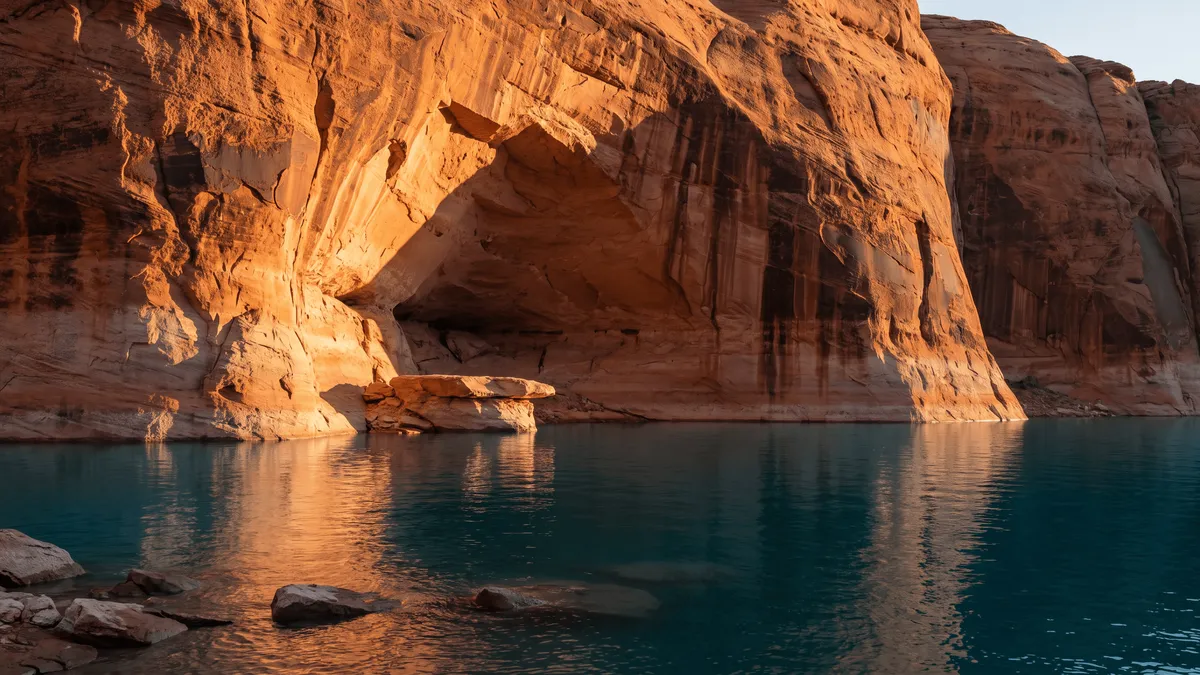
Quick answer
Cliff jumping is prohibited at Lake Powell. The Glen Canyon Superintendent’s Compendium bans jumping or diving off rock cliffs, ledges and man-made structures anywhere in the recreation area, and defines those as anything 15 feet or more above the surface of the water. Vessels are excluded from the rule, so jumping off a houseboat deck is not covered. Violations carry criminal penalties under 36 CFR 1.3.
The prohibition and the height threshold sit in two different sections of the compendium, and the exclusion that matters most to boaters is three words in parentheses. All of it in one table.
| Activity | Status at Lake Powell | Where the rule sits |
|---|---|---|
| Jumping or diving off a cliff, ledge or structure 15 ft or higher | Prohibited | Compendium, 36 CFR 1.5(a)(2) |
| Jumping off the deck of a boat or houseboat | Not covered by this prohibition — vessels are excluded; rental terms still apply | Compendium, same provision |
| Jumping from lower than 15 ft | Below the defined threshold; NPS discourages jumping at any height | Compendium definitions; NPS safety page |
| Bungee jumping off anything | Prohibited | Compendium |
| Rope swinging from an arch or natural bridge | Prohibited | Compendium, climbing and swinging provision |
| Swimming in open water away from the marinas | Allowed | NPS swimming page |
| Swimming in a marina, harbor or launch area | Prohibited | 36 CFR 3.16 |
| Swimming inside Rainbow Bridge National Monument | Prohibited | 36 CFR 3.16 |
What exactly does the cliff jumping rule prohibit?
One sentence in the Superintendent’s Compendium, approved January 1, 2026: “It is prohibited for any person to jump or dive off rock cliffs, ledges, or man-made structures (excluding vessels) within the boundaries of Glen Canyon NRA, including Lake Powell and its tributaries.” Read alone it sounds like a ban at any height, which is how most summaries of it read. The height arrives 280 lines earlier, in the definitions: “rock cliff”, “ledge” and “man-made structure” mean any formation of rock or soil, or engineered construction, “having a height of 15 feet or more from the surface of the water.”
So the prohibition reaches everything 15 feet and up. Below that the definition stops applying, which makes a shorter jump unaddressed by this provision rather than approved. The NPS safety page fills the gap with a position: the Park Service “does not advocate or promote the activity of cliff jumping or diving regardless of the height from the water surface.”
The compendium carries the force of a regulation. It is issued under the superintendent’s discretionary authority as required by 36 CFR 1.7(b), and it says violating any provision may result in criminal penalties under 36 CFR 1.3 — a fine, up to six months of imprisonment, or both. The same document carries two neighboring prohibitions people ask about. Bungee cord jumping is out: all man-made structures and natural features are closed to jumping off by means of an elastic cord or similar device. So are rope swings hung off the good stuff, under a provision banning climbing, rappelling or swinging by any means on any natural bridge, arch or similar natural feature.
Can you jump off a houseboat at Lake Powell?
The compendium excludes vessels from the jumping prohibition in parentheses, so a jump from a boat deck is not what that rule covers. That exclusion is why rental houseboats come with slides bolted to the top deck. Aramark’s 62-foot Journey lists a water slide in its standard equipment, and Antelope Point’s 75-foot Xtreme carries one too.
The exclusion settles one provision and nothing else. Rental agreements add their own restrictions on top. Lake Powell Resorts & Marinas tells renters that cliff jumping and cliff diving are prohibited within Lake Powell and its tributaries, and requires children under 12 to wear a life jacket at all times when on a powerboat, a towable water toy, or the exterior of a houseboat. Read your rental agreement — a boat you damage or an injury aboard runs through the operator, not the Park Service.
Two boating rules apply the moment somebody is in the water beside the boat. No wake within 100 feet of a person in the water, and children 12 and younger wear a Coast Guard approved life jacket while the boat is underway. Our boating rules guide has the rest of the list.
How many people have died cliff jumping at Lake Powell?
Travis Heggie’s review of 46 years of Lake Powell deaths in the Journal of Travel Medicine counted 351 fatal incidents and 386 deaths between 1959 and 2005. Fourteen of those were cliff jumping, and most involved head trauma. The pattern held after the study closed. In August 2017 a 25-year-old died at Anchovy Point after a jump of about 30 feet — he surfaced, struggled in wind and chop, and went under. On July 20, 2023 a 36-year-old from Cincinnati jumped from roughly 50 feet near Buoy 89 in Kane County and did not resurface; divers recovered him the next day in about 30 feet of water.
Impact speed explains that injury pattern. The Park Service puts a 50-foot jump at almost 40 miles per hour on entry. At that speed the surface does not behave like water, and a bad entry angle produces the head and neck trauma the fatality record is full of.
Sandstone is the second problem. Lake Powell’s shoreline is drowned canyon country, so the rock below a ledge steps and shelves in ways you cannot read from above, and a landing zone that was clear one season can hold rock the next as the lake rises and falls — lakepowellwaterlevel.com tracks current conditions. The 2001 death in the Escalante arm involved a 24-year-old who hit the water sideways from about 70 feet; the historical record also holds a broken neck from striking an obstruction below the surface.
Is the ban enforced?
Unevenly, and boaters on the forums say so. Wayne’s Words threads describe warning signs posted at Bullfrog spelling out that cliff jumping is illegal, and a Reddit thread on the subject has a local answering that lots of people do it anyway. Documented citations are hard to find in public reporting, while documented fatalities are not.
Enforcement is also the wrong thing to plan around. Glen Canyon covers 1.25 million acres and rangers are thin on the water, so the consequence worth weighing is the rescue timeline. A jump that goes wrong usually happens miles from a marina, in a canyon with no cell signal, with your own crew doing the first-response work. The emergency procedures guide covers what to carry and how to call for help when the phone shows no bars.
Where to swim instead
Swimming is open across most of the lake. The Park Service says all of Lake Powell is open to swimmers except at marinas, launch areas and inside Rainbow Bridge National Monument, matching the closures listed under 36 CFR 3.16. Five spots reach by vehicle rather than boat: The Chains, Wahweap Swim Beach, Lone Rock Beach, Hobie Cat Beach and Stanton Creek. None of them has a lifeguard or a designated swim beach, so swimmers enter at their own risk.
For the drop-into-the-water part, a houseboat slide is the version the compendium leaves alone — used where your rental operator allows it, off a boat you have anchored somewhere with room. Towables, wakeboarding and skiing are permitted outside harbors and wakeless zones. And the best beaches on the lake are picked for gradual sand entries, which is the same quality that makes them easy to walk into. Check your footing on the way in regardless — sandstone shelves.
If you want the cliffs without jumping off them, paddle under them. The side canyons narrow to slots with walls hundreds of feet overhead and flat protected water at the bottom, and our kayaking guide lists 12 of them by distance from the nearest launch. The slot canyons guide covers the four canyons where the compendium keeps motorboats off plane, which is why they paddle so well.
Key takeaways
- Cliff jumping is prohibited across Glen Canyon NRA. The compendium’s height threshold is 15 feet or more above the surface, defined separately from the prohibition itself.
- Vessels are excluded from the rule, which is why rental houseboats carry top-deck slides. Rental company terms still apply on top of the federal rule.
- Violations fall under 36 CFR 1.3: a fine, up to six months, or both.
- The fatality record is 14 cliff-jumping deaths through 2005 plus more since, mostly head trauma. A 50-foot jump means hitting the water at nearly 40 mph.
- Swimming is open everywhere except marinas, launch areas and Rainbow Bridge — with no lifeguards anywhere on the lake.
Frequently asked questions
Is cliff jumping illegal at Lake Powell?
Yes. The Glen Canyon Superintendent’s Compendium prohibits any person from jumping or diving off rock cliffs, ledges or man-made structures within the boundaries of Glen Canyon NRA, including Lake Powell and its tributaries. The compendium defines those terms as any rock formation or engineered construction 15 feet or more above the surface of the water. It is issued under 36 CFR 1.5(a)(2), and violating any provision can bring criminal penalties under 36 CFR 1.3.
How high can you legally jump at Lake Powell?
The prohibition covers cliffs, ledges and structures 15 feet or more above the surface, so anything lower sits below the compendium’s defined threshold — unaddressed by that provision rather than approved by it. The Park Service says it does not advocate or promote cliff jumping or diving regardless of the height from the water surface. A short drop is not a safe drop either — most of the shoreline is sandstone that shelves unpredictably below the surface, and there are no lifeguards anywhere on the lake.
Can you jump off a houseboat at Lake Powell?
The compendium’s jumping prohibition names rock cliffs, ledges and man-made structures and then excludes vessels in parentheses, so jumping from a boat is not covered by that rule. That settles one provision and nothing else — rental companies set their own terms on top of it. Aramark requires children under 12 to wear a life jacket at all times on a powerboat, a towable water toy or the exterior of a houseboat, and several rental models come with a factory water slide off the top deck.
What is the penalty for cliff jumping at Lake Powell?
The compendium is issued under the superintendent’s discretionary authority as required by 36 CFR 1.7(b), and states that violating any provision may result in criminal penalties under 36 CFR 1.3. That section makes a violation of 36 CFR parts 1 through 7 punishable by a fine, imprisonment of up to six months, or both, plus court costs. In practice rangers post warning signs at the marinas and respond to incidents.
How many people have died cliff jumping at Lake Powell?
A Journal of Travel Medicine review of 46 years of Lake Powell fatalities counted 351 fatal incidents and 386 deaths between 1959 and 2005, and recorded 14 of those deaths as cliff jumping, most involving head trauma. Deaths have continued since: a 25-year-old at Anchovy Point in August 2017 after a jump of about 30 feet, and a 36-year-old near Buoy 89 in July 2023 after a jump of about 50 feet.
Where can you swim at Lake Powell?
The Park Service says all of Lake Powell is open to swimmers except at marinas, launch areas and inside Rainbow Bridge National Monument, which matches the closures listed under 36 CFR 3.16. Five swim spots reach by vehicle: The Chains, Wahweap Swim Beach, Lone Rock Beach, Hobie Cat Beach and Stanton Creek. There are no lifeguards and no designated swim beaches anywhere on the lake, so everything is swim at your own risk.
Are rope swings allowed at Lake Powell?
Not off natural features. The compendium prohibits climbing, rappelling or swinging by any means on any natural bridge, arch or similar natural feature or man-made structure inside Glen Canyon NRA, which covers a rope hung from an arch or a canyon rim. Bungee cord jumping has its own prohibition: all man-made structures and natural features are closed to jumping off by means of an elastic cord or similar device.
Navigate Lake Powell like a local
The offline map, marina weather & trip planning that boaters actually use — free to try.