
Where to swim at Lake Powell: 5 drive-up spots and the rules
Five Lake Powell swim spots you can drive to — Wahweap, Lone Rock, The Chains, Hobie Cat, Stanton Creek — plus where swimming is banned and the safety rules.
Quick answer
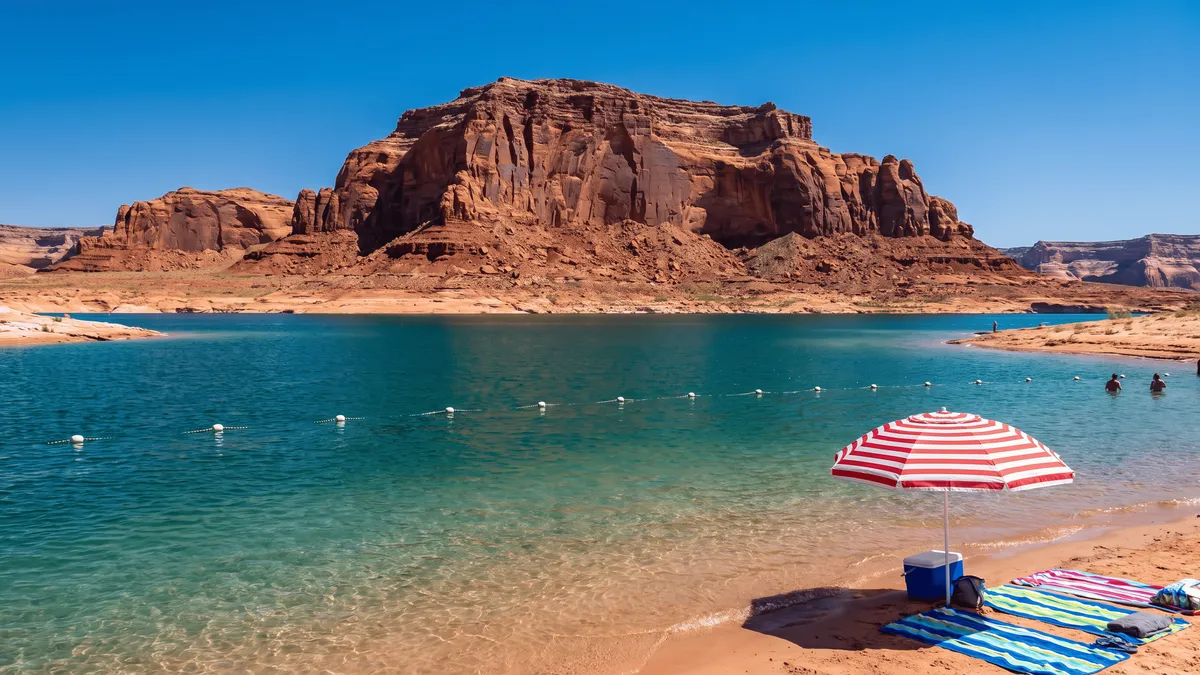
Five Lake Powell swim spots are reachable by car: Wahweap Swim Beach, Lone Rock Beach, The Chains, Hobie Cat Beach and Stanton Creek. Wahweap and Hobie Cat sit behind buoy lines that keep motorboats out, so they’re the calm picks for kids. Everywhere else you swim from a boat — legal across the whole lake except marinas, launch areas and Rainbow Bridge. There are no lifeguards anywhere on the lake.
The Park Service’s swimming page lists exactly five swim areas you can drive to, and the rest of this 1,900-mile shoreline you reach by water. Each spot swims differently — two are sandy and motor-free, one is a slickrock scramble into deep water, and two double as campgrounds.
| Spot | Where | Entry | Best for |
|---|---|---|---|
| Wahweap Swim Beach | Across from Wahweap Campground | Sand, gradual | Kids — no motorboats past the buoys |
| Lone Rock Beach | Off US-89, Utah side | Sand, gradual | Groups, all-day setups, drive-on access |
| The Chains | East of Glen Canyon Dam | Slickrock into deep water | Strong swimmers without a boat |
| Hobie Cat Beach | Bullfrog, west of the marina | Sand | The north lake’s kid spot |
| Stanton Creek | Bullfrog Bay | Rock and sand mix | Swimming where you camp |
| Any open cove | Everywhere else | Varies | Swimming off the boat |
1. Wahweap Swim Beach — the calm one
Wahweap Swim Beach is the only downlake swimming area where motorized boats can’t cross the buoy line, which makes it the flattest water on the southern lake — the park’s page allows only kayaks and paddleboards past the sand. Park in the gravel lots on Lakeshore Drive between the picnic area and Stateline ramp, then walk the sandy path down. The portable toilet you pass on the way in is the last one; there’s nothing on the beach itself, though the campground store across the street sells snacks.
Day use only, no glass containers, dogs on a leash. The walk from the lot is short but unpaved, and the park flags it as not accessible for mobility devices.
2. Lone Rock Beach — sand, space and a truck full of gear
Lone Rock is the beach for the maximal setup: you drive onto the sand, so canopies, coolers and paddleboards come along at zero carrying cost, and the entry is gradual for a long way out. It sits just off US-89 on the Utah side, in sight of the monolith it’s named for, with vault toilets across the beach and seasonal showers near the paved entrance.
The crowd is the tradeoff — this is the busiest beach on the lake, and boats and vehicles share the same shoreline, so keep swimmers between your camp and the water rather than down the open beach. Day use costs only the entrance fee; staying overnight runs $14 per vehicle, and the beaches guide covers the camping side. One habit worth building here: the park’s algal-bloom advisories have named Lone Rock among the affected spots in past seasons, so scan the surface before the kids go in.
3. The Chains — deep water without a boat
The Chains is where Page locals swim: a gravel road just east of Glen Canyon Dam, past the Hanging Gardens trailhead, ending at two parking lots with toilets and nothing else. From there you pick your own line down the slickrock to the water — the park’s page is explicit that you choose your own route over open rock, shade is absent, and the water is deep right off the stone edge rather than off a beach. The name comes from the buoy chain strung across the channel to keep boats away from the dam.
This is the wrong spot for kids or uncertain swimmers, and the park says so plainly: boats can’t see you well from the channel, and getting out means climbing back up the way you came. Wear real shoes for the scramble and remember the jumping rule — anything 15 feet or more above the surface is prohibited, covered in our cliff jumping guide. How long the scramble runs changes with the lake — in low seasons the last stretch gets steep enough that visitors turn around, so check current conditions at lakepowellwaterlevel.com before you count on reaching the water. The road is open sunrise to sunset.
4. Hobie Cat Beach — Bullfrog’s answer
Hobie Cat Beach is the only uplake swimming area where motorized boats are excluded, which makes it the north lake’s version of Wahweap Swim Beach: sand, a buoy line, and water that stays flat while the main bay fills with wakes. Turn off Highway 276 just past the Corner Store and the mussel-decontamination station, keep left on the dirt road, and it’s about a half mile in — with a stretch of deep soft sand that catches two-wheel-drive cars, so walk it if your vehicle sits low.
A vault toilet and a trash pullout are the facilities. Day use only: no camping, no fires, no glass. If you’re staging out of the marina anyway, the Bullfrog guide covers what’s operating where this season.
5. Stanton Creek — swim where you camp
Stanton Creek Primitive Camping Area, just north of Bullfrog off Highway 276, puts drive-in campers on the same shoreline boaters beach on — and the swimming happens straight off camp. The entry is a rock-and-sand mix rather than Lone Rock’s long sand bench, and there are no buoy lines here, so boats do come and go along the same water.
The Park Service lists it among the five vehicle-accessible swim areas, and it’s the only one where you can legally wake up next to the water: camping runs $12 per night (as of mid-2026) with pit toilets and nothing else. Swim early, before the bay picks up traffic and the afternoon wind.
Swimming off the boat
The other version of Lake Powell swimming starts wherever you drop anchor. The whole lake is open to it outside the marinas, and picking a cove off the main channel matters more than picking a famous one — the park’s standing warning is to stay out of the path of other vessels, and boats running the channel are not looking for a head at the surface.
Engines and generators go off before anyone goes in — carbon monoxide collects under swim steps and rear decks and stays dangerous after shutdown. Keep someone on deck watching the swimmers, because out here that person is the entire safety system. Restart the engine only after every swimmer is aboard and counted. Approaching boats owe you 5 mph inside 150 feet of any swimmer, and the full list of what other boats can and can’t do around you is in the boating rules guide.
Where swimming is prohibited
Three closures, and they’re absolute: all marinas, all launch areas, and everything inside Rainbow Bridge National Monument. The Superintendent’s Compendium defines the marina closure broadly — docking slips, mooring fields, fuel docks, pump-out stations, floating restrooms and launch ramps, generally marked off by wakeless buoy lines and breakwaters.
The reason is the ugly failure mode, in the park’s words: potentially lethal safety concerns. Marina water carries boat traffic and propellers, and docks and vessels can leak electric current into the water around them — a hazard you can’t see, smell or feel until it stops you swimming. Stay outside the buoy lines and the problem never comes up.
The rules and habits that keep the record clean
The park’s fatality record is blunt: more than 150 people have drowned at Lake Powell without a life jacket on. There are no lifeguards anywhere — every spot above is swim at your own risk. So the short list: swim with a buddy, put children 12 and under in a Coast Guard–approved jacket (required whenever a boat is underway, recommended any time they’re near the water), and treat spring swims with respect, because prolonged immersion in a cold lake brings hypothermia even under warm sun.
Then the surface check. The park’s recreational water advisory — last updated May 2026 — confirmed microcystin near or above EPA health thresholds in Antelope Canyon, and the guidance applies lakewide: stay out of water carrying a pale-green film or scum, keep pets out of it, shower after contact, and report suspected blooms to the park. The lake stays fully open; the advisory is a look-before-you-swim rule, and on a lake with 1,900 miles of shoreline, a cleaner cove is rarely far.
Key takeaways
- Five swim spots reach by car: Wahweap Swim Beach, Lone Rock, The Chains, Hobie Cat and Stanton Creek. The rest of the lake you swim from a boat.
- Wahweap and Hobie Cat are the motor-free pair — the calmest water on the lake for kids, one downlake and one up.
- Marinas, launch areas and Rainbow Bridge are closed to swimming, for lethal reasons: props, traffic and electric current in dock water.
- Off the boat: engines and generators off first, a spotter on deck, and no restart with anyone in the water — carbon monoxide pools under swim decks.
- No lifeguards anywhere. Check the surface for scum before swimming, and put kids in life jackets — over 150 of the lake’s drownings happened without one.
Frequently asked questions
Where can you swim at Lake Powell without a boat?
Five spots reach by vehicle: Wahweap Swim Beach and Lone Rock Beach near Page, The Chains just east of Glen Canyon Dam, and Hobie Cat Beach and Stanton Creek near Bullfrog. Wahweap and Hobie Cat sit behind buoy lines that keep motorized boats out, which makes them the calmest choices. All five are inside Glen Canyon NRA, so the park entrance fee applies — $30 per vehicle for 7 days as of mid-2026.
Can you swim anywhere at Lake Powell?
Almost anywhere. The National Park Service opens the whole lake to swimming except marinas, launch areas and Rainbow Bridge National Monument. The marina ban exists because of what the park calls potentially lethal hazards — boat traffic, propeller strikes and electric current leaking from docks and vessels. There are no lifeguards anywhere on the lake and no formally designated swim beaches, so every swim is at your own risk.
Is it dangerous to swim behind a houseboat?
Yes, whenever a generator or engine is running — and for a while after. Carbon monoxide from exhaust collects under swim steps and rear decks, and the park calls it an odorless, tasteless gas that can kill you. It stays dangerous after the engine shuts down. Shut off engines and generators before anyone swims, keep swimmers away from the stern, and never start an engine with someone overboard. The same gas is why houseboats sharing a beach must park 100 feet apart.
Do children need life jackets to swim at Lake Powell?
On a boat, yes: children 12 and younger must wear a US Coast Guard–approved life jacket whenever the vessel is underway. In the water, the park tells parents to put young children and inexperienced swimmers in one around water generally — and not to rely on the jacket alone. The motor-free areas at Wahweap Swim Beach and Hobie Cat Beach are the two calmest places on the lake for kids to swim.
Is there an algae warning at Lake Powell right now?
As of mid-2026 the park has a recreational water advisory in place. Testing found microcystin, a cyanotoxin, at levels near or above EPA health thresholds in Antelope Canyon, and the park warns other areas can hold toxins too. The lake remains fully open for recreation. The working rule: look at the surface before you swim, stay out of water carrying a pale-green film or scum, keep pets out of it, and shower after any contact.
When can you swim at Lake Powell?
The park calls mid-summer through early fall the swimming season. Spring is the trap — warm air over a lake that is still cold from winter, and prolonged immersion can bring hypothermia even on a sunny day. There are no seasonal closures on the swim spots themselves: Wahweap Swim Beach, Lone Rock and Hobie Cat are open year-round for day use, and the road into The Chains is gated from sunset to sunrise.
How much does it cost to swim at Lake Powell?
The Glen Canyon NRA entrance fee covers it: $30 per private vehicle or $15 per person on foot or bike, both good for 7 days, with an annual pass at $55 (as of mid-2026). None of the five drive-up swim spots charges anything beyond that for day use. Camping is separate — Lone Rock Beach runs $14 per vehicle per night if you stay over. Kids under 16 enter free.
Find the calm cove before you commit
The Navigator app keeps 20 named bays and 132 side canyons on your phone offline, with the wind forecast that decides whether your swim spot stays flat or turns to chop.